
Polyaspartic Garage Floor Coating in Boise
A fast-curing, UV-stable coating system built for high-desert sun, hot summer tires and Idaho winters.
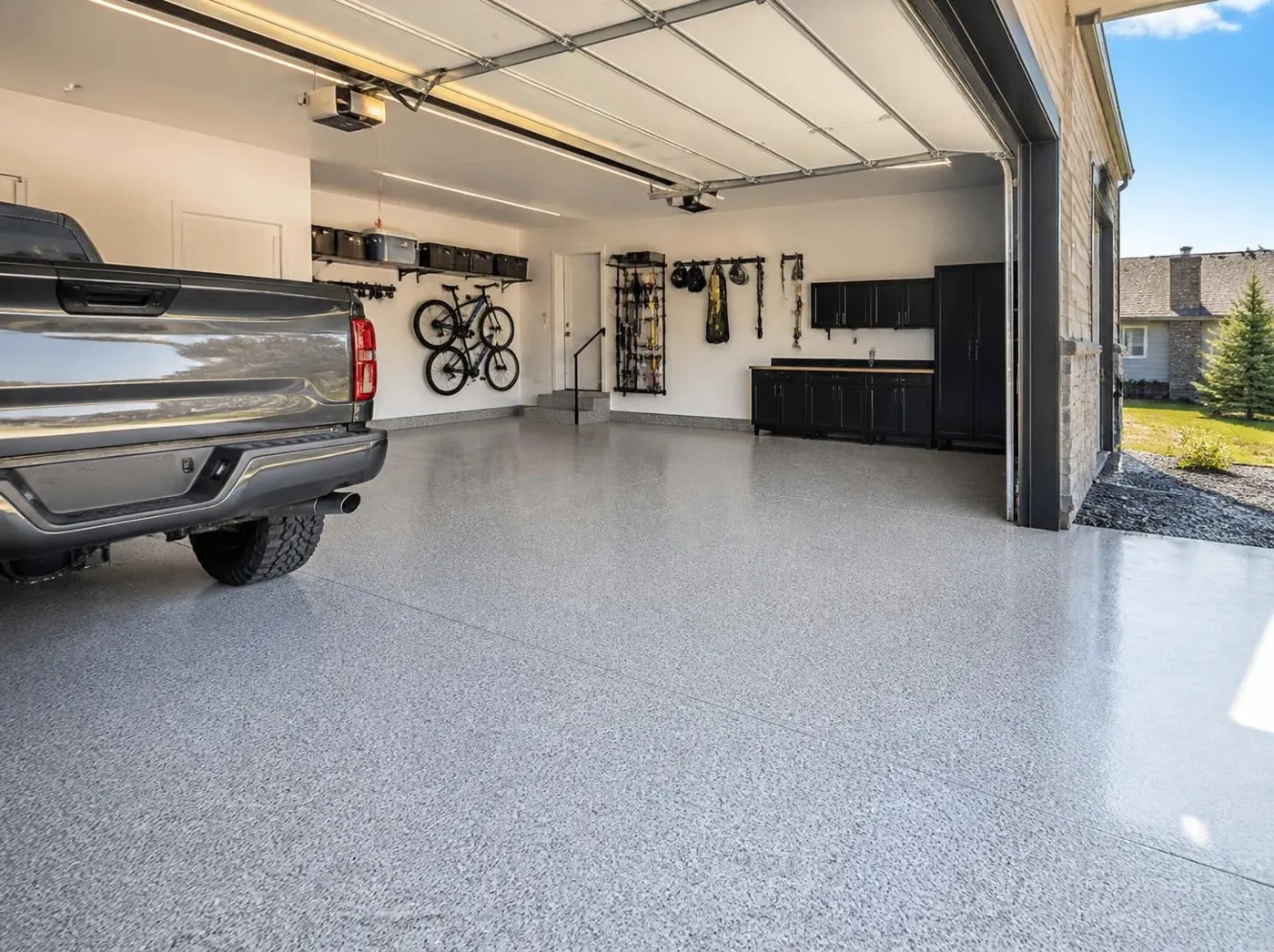
Get a Free QuotePolyaspartic is a type of polyurea coating. Compared with traditional epoxy it cures faster, stays flexible, and holds its color in sunlight instead of ambering. In a garage it's usually installed as a flake system: a polyurea or epoxy base, a full broadcast of color chips, and a clear polyaspartic topcoat.
It's a strong fit for Boise-area homes where the garage door stays open on bright summer afternoons, and for anyone who wants their garage back quickly.
Free QuoteEnter your info below
Why homeowners choose polyaspartic
- UV stable: won't yellow where sunlight hits the floor near the door
- Fast return to service: walk on it in hours; vehicles often in a day or two
- Cures in cooler temperatures: useful for fall and early-spring installs
- Hot-tire resistance: a hard, chemical-resistant topcoat that resists softening on 100°F days
- Chemical resistance: stands up to oil, antifreeze and winter deicers
Polyaspartic vs epoxy — the honest version
Polyaspartic isn't automatically better at everything. Epoxy builds thicker per coat, has a longer working time, and costs less — which is why many systems use an epoxy base under a polyaspartic topcoat. Pure "one-day" polyaspartic floors are fast, but that speed only works if the concrete prep isn't rushed. On slabs with moisture or heavy damage, a slower system with proper repairs is often the right call. Read the full comparison in epoxy vs polyaspartic garage floors.
Bottom line: the coating chemistry matters less than the grind, the repairs and the topcoat thickness. Ask any installer exactly how they prep the slab.
Can polyaspartic go straight on concrete?
It can be applied directly to properly ground concrete, but it's never applied to bare, unprepared concrete. The slab needs a diamond grind to remove sealers and open the surface, repairs to cracks and spalls, and a moisture check. New homes in Meridian, Kuna and Star often have a curing compound on the slab from the builder that has to be ground off first — see coating a new-construction garage floor.
Where it makes the most sense
West- and south-facing garages with doors that stay open, garages that double as workshops or gyms, homeowners on a tight move-in timeline, and anyone who wants a lighter color that stays true. It's also a common choice for shops and RV garages where heavy tires sit for long periods.
What it typically costs
Polyaspartic / polyurea flake systems typically run about $5.50–$10 per sq ft in the Treasure Valley — roughly $2,400–$4,800 for a typical 2-car garage. Typical ranges only; your quote comes from a free on-site estimate.
Polyaspartic Garage Floor Coating FAQ
How much does a polyaspartic garage floor cost?
In the Boise area, a polyaspartic or polyurea flake system typically runs about $5.50–$10 per sq ft installed, depending on garage size, concrete repairs and topcoat thickness. That's usually a bit more than a comparable epoxy flake floor. Your exact price comes from an on-site estimate.
What are the downsides of polyaspartic?
It cures fast, so installers have a short working window and prep can get rushed. Material costs are higher than epoxy. And no coating fixes bad prep: if the slab isn't ground and repaired properly, any system can delaminate. Choose an installer who explains their prep in detail.
Is polyaspartic the best garage floor coating?
For many sunny, high-traffic Treasure Valley garages it's an excellent choice, especially as a topcoat. But an epoxy base with polyaspartic top, or a full epoxy system, can be the better value depending on your concrete and budget. We'll recommend the system that fits your floor.
Related services & areas
Ready for a garage floor that lasts?
Free on-site estimates across Boise and the Treasure Valley.