
Polyaspartic Garage Floor Coatings in Eagle and Meridian: Cure Time, Cold-Weather Windows and What a Quote Should Include
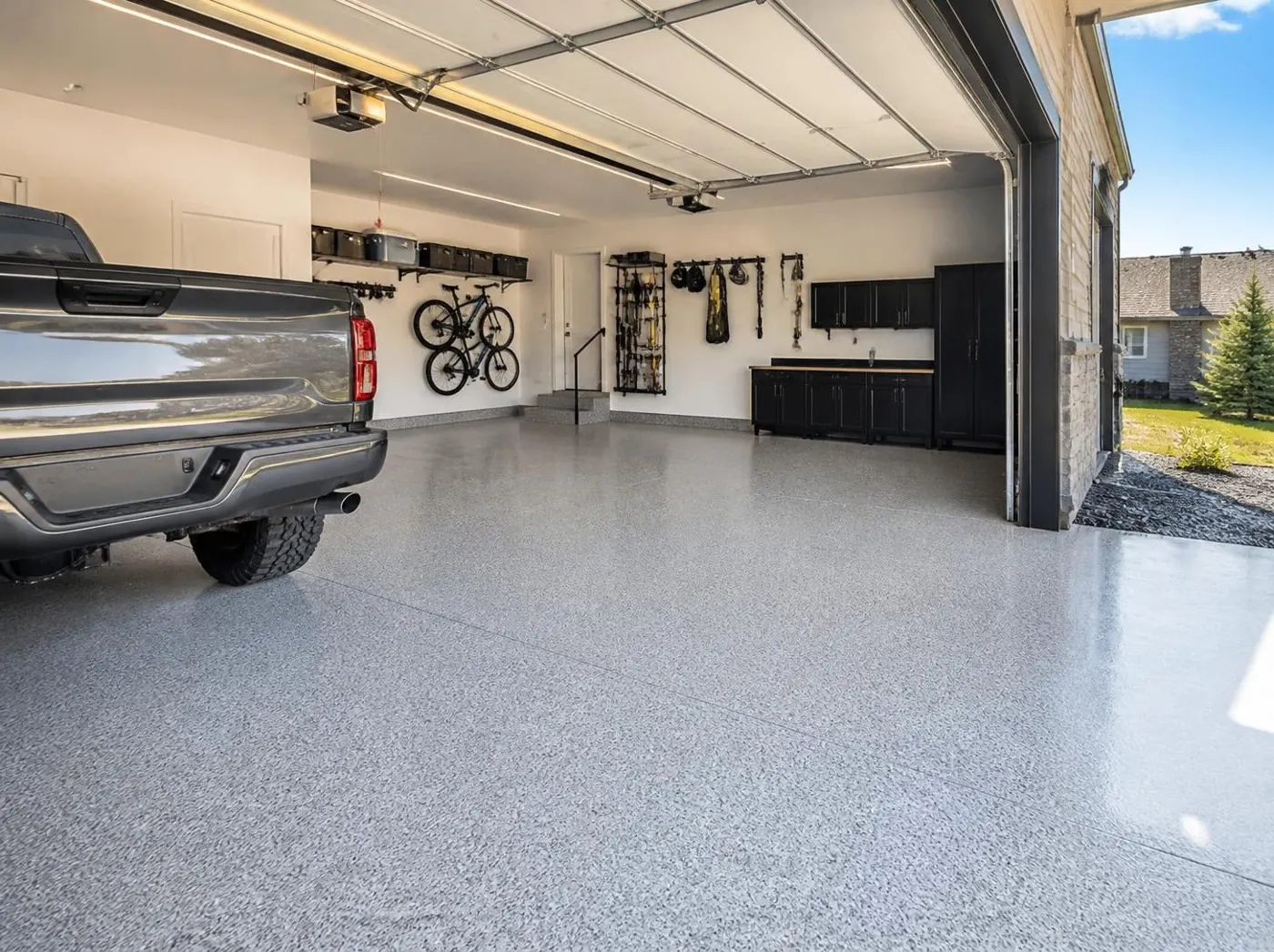
Polyaspartic has become the coating that Eagle and Meridian homeowners ask about by name, usually for two reasons: the garage comes back into service quickly, and the finish holds its color near a door that faces the afternoon sun. This guide covers the practical side: how fast it cures, when in the year it can go down, what moves the price, and what a written quote should spell out. For the head-to-head chemistry comparison, read epoxy vs. polyaspartic garage floors; this post picks up where that one leaves off.
Boise Garage Floor Epoxy is a free quote service. The independent local coating companies that reply to your request inspect the slab, write the quote and do the work.
What a polyaspartic garage floor actually is
Polyaspartic is a type of polyurea coating. In a garage it is almost always installed as a flake system: a polyurea or epoxy base coat, a full broadcast of color chips, and a clear polyaspartic topcoat. Compared with traditional epoxy, it cures faster, stays flexible, keeps its color in sunlight instead of ambering, and handles hot tires well. The polyaspartic garage floor coating page lists the full set of trade-offs.
Many floors here are hybrids: an epoxy base for build and bond, with a polyaspartic topcoat for UV stability and wear. That combination usually lands between the two full systems on price and schedule.
Cure time: what to expect day by day
Return to service is the practical difference most homeowners notice. Many polyaspartic flake systems can be ground, coated and topcoated in a single visit, with light foot traffic later that day and vehicles back sooner than with epoxy. A typical epoxy flake system is more often spread over two days or more, with parking waiting longer still.
Two cautions. Cure times depend on the products, the film thickness and the slab temperature that day, so follow the timing your installer gives you. And the fast cure cuts both ways: polyaspartic sets up quickly in warm weather, so rushed or thin application shows up as roller marks, thin spots or poor bonding.
Cold-weather install windows in Eagle and Meridian
Epoxy cures slowly in a cold garage, and most products list a minimum slab temperature. Polyaspartic and polyurea systems cure at lower temperatures, which is why they are popular for fall and early-spring installs in the Treasure Valley and why a winter install is still possible with the right products and planning. The installer should check the slab temperature, not just the air, and may bring temporary heat. Dry high-desert air helps; humidity is rarely the problem it is in wetter regions.
If you have a choice, coating before the first snow is the better sequence, since a bare floor that goes into winter spends months soaking up snowmelt, salt brine and magnesium chloride off vehicles. The post on garage floor coatings and Idaho winters covers what deicer does to bare concrete.
Why Eagle and Meridian garages lean toward polyaspartic
Eagle. Homes here tend to be larger, and the garages follow: three- and four-car layouts, oversized bays for a boat or trailer, and separate shops on acreage. Big, open slabs usually have control joints and shrinkage cracks that should be treated before coating. Eagle's summer sun is strong and wide garage doors let in a lot of it, so a UV-stable topcoat keeps colors true near the opening. In winter, foothill roads can mean more snow, ice and deicer coming in on tires, and stored boats and RVs add weight and fuel drips, which is where a thicker build earns its keep. The Eagle garage floor epoxy page has more on finish options.
Meridian. Many homes are newer builds with big attached garages, often three-car layouts with a tandem bay. Builders often leave a smooth troweled surface, sometimes with a curing compound on top, and coatings do not bond to that; concrete should also cure roughly 28 days before it is coated. Polyaspartic is the usual recommendation when a Meridian buyer wants a faster return to service and better UV stability on a south- or west-facing door. See the Meridian garage floor epoxy page and the post on coating a new construction garage floor.
What drives the price
Polyaspartic or polyurea flake systems typically run about $5.50–$10 per square foot installed in the Boise area, compared with about $4.50–$8 for a full-broadcast flake epoxy floor. A typical two-car garage of 400–480 square feet works out to roughly $2,400–$4,800. Both cities trend larger: a three-car garage of 600–750 square feet often lands around $3,200–$6,500 depending on the system, and a 1,000-square-foot Eagle shop usually comes in toward the lower end per square foot. These are typical ranges, not quotes. The biggest swing factors are:
- Square footage, measured wall to wall including bump-outs and tandem bays.
- Concrete condition: cracks, spalling near the door, oil stains, and old paint or sealer that must be ground off.
- Curing compound on new slabs, common across Meridian subdivisions.
- Moisture that calls for a mitigating primer under the system.
- Stem walls, usually coated 4–6 inches up the wall.
- Flake density and topcoat thickness, since a thicker UV-stable topcoat costs more but lasts longer in a sunny garage.
- Heavy repair or moisture mitigation, typically $1–$3 per square foot on the affected area.
The garage floor epoxy cost guide has the full table and a calculator for a ballpark by garage size.
What a polyaspartic quote should spell out
Two quotes for the same Eagle garage can differ by a couple of thousand dollars and both be honest, because they often describe different floors. Put them side by side and check that each one states:
- Whether the slab will be diamond ground or acid etched; etching does not remove sealers or curing compounds.
- What resin the base coat is (polyurea, epoxy or a moisture-mitigating primer) and what the topcoat is.
- Whether the flake is a full broadcast or a light sprinkle.
- How cracks, spalls and control joints will be handled, and whether stem walls are included.
- When you can walk on it and when you can park on it, for your products and the expected slab temperature.
Prep is the part you cannot see once the floor is done; the concrete repair and floor prep page is worth reading before you compare numbers. And polyaspartic is not always the right call: a slower system with proper repairs is often better on slabs with moisture or heavy damage.
Frequently asked questions
How long does a polyaspartic garage floor take to cure in Eagle or Meridian?
Polyaspartic topcoats return to service faster than epoxy. Foot traffic is typically fine within hours, and vehicles often go back in within a day or two, though the exact timing depends on the products, the film thickness and the slab temperature that day. Always follow the cure times the installer gives you for your specific floor rather than a general figure.
Can a polyaspartic coating be installed in a Meridian garage in winter?
Often, yes. Polyaspartic and polyurea systems cure at lower temperatures than most epoxies, which is why they are popular for fall and early-spring installs in the Treasure Valley. The installer should check the slab temperature, not just the air, and may use temporary heat. Dry high-desert air helps, since humidity is rarely the problem it is in wetter climates.
How much does a polyaspartic garage floor cost in Eagle?
Polyaspartic or polyurea flake systems typically run about $5.50 to $10 per square foot installed in the Boise area, or roughly $2,400 to $4,800 for a typical two-car garage. Eagle garages trend larger, so a three-car floor often lands higher, and heavy repair or moisture mitigation adds about $1 to $3 per square foot. These are typical ranges, not quotes.
Does a new Meridian slab need anything special before polyaspartic?
Yes. New concrete should cure about 28 days before coating, and builders often leave a smooth troweled surface with a curing compound on top that coatings do not bond to. A diamond grind removes it and opens the surface. The installer should also check the slab for moisture and fill any shrinkage cracks before the base coat goes down.
Next step
If you are in Eagle, Meridian or anywhere in the Treasure Valley, request a free on-site quote. Independent local companies reply directly, look at the concrete, and give you a written price that lists the prep, the system and the cure timing for your garage.