
Garage Floor Epoxy Cure Time in Boise: When Can You Walk and Park on It?
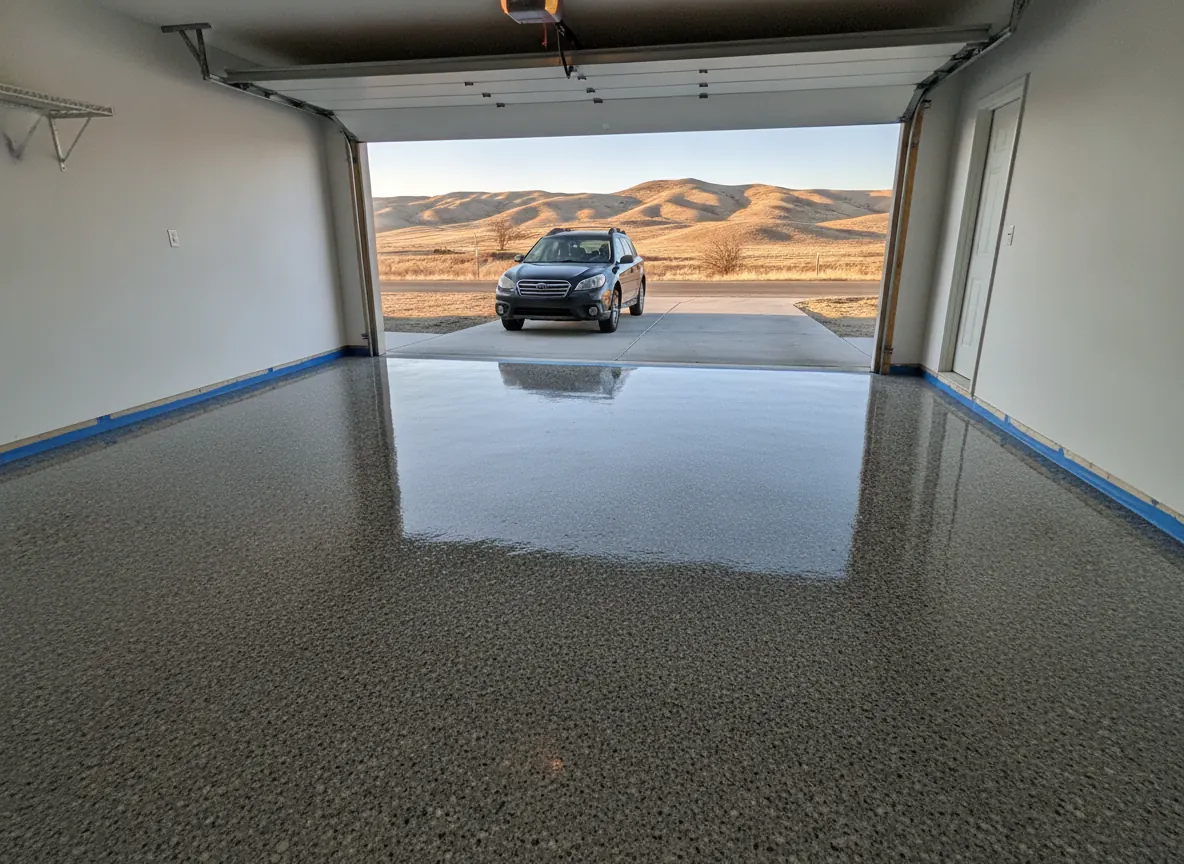
On a typical Boise-area install, garage floor epoxy cure time works out like this: you can walk on a new epoxy floor after about a day, and you should plan to keep vehicles off it for a few days. A polyaspartic topcoat shortens the wait — foot traffic in hours, and cars are often back inside in a day or two. The exact number for your garage depends on which coating system goes down and how warm the slab is, which is why an epoxy floor laid in a Boise garage in July cures on a different clock than one laid in January.
Below is what that timeline looks like in a real Treasure Valley garage, what speeds it up or slows it down, and how to plan the days around it.
Install time vs. cure time: two different clocks
People often mix up how long it takes to epoxy a garage floor with how long the floor takes to cure. They’re separate. Most one- and two-car garages around Boise are ground, repaired and coated in one to two days. The steps run in order: a full diamond grind with dust extraction, cracks and spalls filled and ground flush, a pigmented base coat, the flake broadcast (or the metallic layer), then a scrape, vacuum and clear topcoat. You can see each step on our installation process page.
Some jobs take longer before the cure clock even starts. The three-car garages common in newer Meridian, Eagle, Kuna and Star homes have more square footage to grind and coat. Detached shops and RV bays, metallic floors and slabs with heavy spalling near the door all add time too. The cure period begins once the topcoat is down.
Epoxy garage floor cure time: walk after a day, park after a few
For a standard epoxy flake floor, foot traffic is typically fine after about a day. Vehicles usually wait a few days, depending on the system and the temperature. That gap exists because tires are hard on a floor that isn’t fully hardened.
That matters more here than in a lot of places. Treasure Valley summer afternoons run into the 90s and 100s, and a car coming home off a hot street brings hot tires with it. Hot tires can soften weak coatings and pull them off the floor — the problem known as hot-tire pickup. A floor that was ground properly and given a hard topcoat resists it, but giving the coating its full cure before the first hot tire rolls in is part of that. If you want the background, read hot-tire pickup and UV yellowing in Boise.
Polyaspartic cure time: the faster option, with a catch
Polyaspartic is a type of polyurea coating, and the main reason homeowners pick it is speed. You can walk on it in hours, and vehicles are often back in within a day or two. It also cures at cooler temperatures, which makes it useful for fall and early-spring installs. Many Boise floors use an epoxy base with a polyaspartic topcoat to get some of that speed along with UV stability near a sunny open door. More on that on our polyaspartic garage floor coating page.
The catch: because it cures fast, installers have a short working window, and prep can get rushed. A “one-day” floor only works if the grind and repairs aren’t cut short. When you compare quotes, ask how the slab will be prepared, not just how quickly you’ll be parking on it.
How Treasure Valley weather changes epoxy floor cure time
Winter. Epoxy cures slowly in a cold garage. Winter installs can still be done with the right products and conditions — the installer may heat the space or choose a polyaspartic system that cures at lower temperatures. If you’re booking between late fall and early spring, ask what product will go down and how the cold changes your wait before you can park.
New-construction slabs. If you just closed on a new home in a Kuna, Star, Meridian or Nampa subdivision, there’s a wait before any coating goes down: new concrete generally needs about 28 days to cure after the pour. Builder curing compounds also have to be ground off first. See coating a new-construction garage floor for how to time it around move-in.
Basements. Basement floors need good ventilation while coatings cure, so the timing is planned around keeping air moving. That’s covered on the basement floor epoxy page.
Planning your garage around the cure period
A little planning makes the cure days painless:
- Empty the garage floor completely before install day, including shelving that sits on the slab if it’s being coated around.
- Park vehicles in the driveway or on the street for the whole cure period, not just install day. In winter, think about where you’ll scrape the windshield.
- Keep kids and pets out of the garage until the floor is ready.
- Make sure there’s power and water access for the installer.
- Once you’re parking again, sweep regularly and squeegee out winter slush so salt brine and magnesium chloride don’t sit on the surface.
Whether you’re in an older Boise neighborhood or a newer part of Meridian, the floor itself sets the timeline. See our Boise garage floor epoxy page for local options.
Get exact timing for your floor
Cure time isn’t one number. It depends on the system, the season and the shape your concrete is in. At a free on-site estimate, the installer measures the floor, checks the concrete for cracks and moisture, and tells you when you can walk and park on your specific floor. Request a free quote and plan your install around a real date.
Garage floor epoxy cure time FAQ
How long before I can park on a new epoxy garage floor?
For a standard epoxy flake floor, vehicles usually wait a few days after the topcoat goes down. Polyaspartic systems return to service faster, often in a day or two. Temperature matters, so your installer should give you the exact timing for your floor.
Can I walk on my epoxy floor the next day?
Usually, yes. Foot traffic is typically fine after about a day on an epoxy system, and within hours on a polyaspartic topcoat. Keep kids and pets out until the installer says the floor is ready.
Does a cold Boise garage make epoxy take longer to cure?
Yes. Epoxy cures slowly in a cold garage, so winter installs may involve heating the space or choosing a polyaspartic system that cures at lower temperatures. Your installer can recommend timing for your floor.
Ready for a garage floor that lasts?
Free on-site estimates across Boise and the Treasure Valley.